
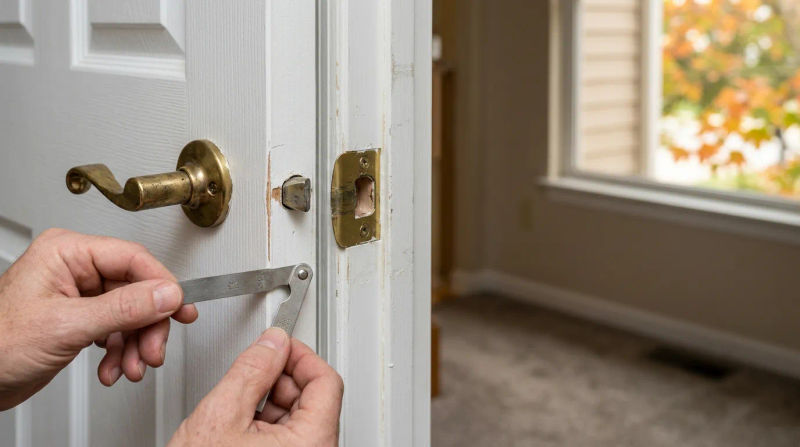
It’s a familiar scene here in Westfield as October rolls in. The leaves are piling up, there’s a distinct chill in the morning air, and you reach for the bedroom door only to find it scrapes against the frame. A door that worked perfectly all summer suddenly puts up a fight. That grating sound or the extra shoulder-shove needed to get it closed isn’t just an annoyance; it’s your home telling you something has shifted.
As a handyman who’s spent over a decade working in homes throughout the area, I’ve seen this exact scenario play out countless times. The first significant temperature drops of the season are often the trigger that turns a minor alignment issue into a full-blown interior door sticking problem. Let's walk through what to look for and what might be causing it.
Common Signs and Symptoms
Before we can figure out the why, we need to clearly identify the what. A sticking door can manifest in several ways, and paying attention to the specific symptoms can help pinpoint the root cause. You might be experiencing one or more of these issues:
- Audible Rubbing or Scraping: This is the most obvious sign. You can hear the door making contact with the frame or the floor as it moves. Note where the sound is coming from - the top, the bottom, or the latch side.
- Visible Scuff Marks: Look for worn paint or wood on the top edge of the door, along the side, or on the door jamb. A common issue is a door rubbing floor Westfield homeowners often see after new carpet or hardwood is installed, leaving a tell-tale arc on the floor.
- Difficulty Latching: The door closes, but the latch bolt doesn’t line up with the hole in the strike plate. You might have to lift, push, or pull the door to get it to click shut. These are classic strike plate misalignment signs.
- The Door Springs Back: You close the door, but it doesn't stay fully closed. It might pop back open an inch or two because it’s binding against the frame, creating tension.
- Uneven Gaps: Close the door and look at the gap between the door and the frame. Is it consistent all the way around? A gap that’s tight at the top and wide at the bottom (or vice-versa) indicates the door is no longer sitting squarely in its frame.
What Causes This Problem
An interior door that suddenly starts sticking is rarely due to a single cause. It's usually a combination of factors, especially with the seasonal changes we experience in the fall.
- Seasonal Swelling and Contraction: Wood is a natural material that breathes. It absorbs moisture from the air during humid summer months and releases it when the air becomes dry in the fall and winter. This process causes the wood in your door and its frame to expand and contract. The first freeze of October can cause a rapid change, making a door that was merely snug in the summer suddenly bind tightly. In the newer, tightly sealed homes common in Westfield, built in the 1990s and 2000s, indoor humidity can get trapped, making these seasonal shifts even more pronounced.
- Loose or Worn Hinges: This is one of the most common culprits and, thankfully, often the easiest to address. Over thousands of openings and closings, the screws holding the hinges to the door and the frame can work themselves loose. This allows the door to sag, causing the top corner to rub against the frame. You might also notice hinge binding symptoms fall reveals, where a hinge pin has worn down, creating a slight wobble that becomes a major problem as the door shifts with the temperature.
- House Settling: Many homes in our area are from the suburban boom of the late 20th and early 21st centuries. These large, two-story properties have had a couple of decades to settle into their foundations. This is a normal process, but it can cause the structure to shift slightly, pulling door frames out of square. What was once a perfect rectangle is now a slight parallelogram, and the door no longer fits correctly.
- Strike Plate Misalignment: Sometimes the door itself is fine, but the hardware is the problem. Similar to hinges, the strike plate on the door jamb can become loose. It can also be a symptom of the door sagging or the house settling. If the latch isn't lining up, it's one of the clearest strike plate misalignment signs you can get.
- Excessive Paint Layers: It might sound minor, but multiple layers of paint can add significant thickness. If a door and frame have been painted over and over again without proper sanding, that buildup can eliminate the necessary gap, causing the door to stick.
- Warped Door: In cases of extreme moisture changes or if a door (especially a hollow-core one) gets wet, the door itself can twist or warp. If you look down the edge of the door and it doesn't appear flat, this could be your issue.
When to Call a Professional
Some door issues are perfect for a Saturday morning DIY fix, while others can be made much worse without the right tools and experience. Here’s how my team and I generally advise homeowners to think about it.
Good DIY Starting Points:
- Check the Hinge Screws: The very first thing you should do is check every screw on every hinge, both on the door and the frame. Use a screwdriver (not a drill, which can strip the wood) to see if you can tighten them. A single loose screw can cause a surprising amount of sag. Often, simply tightening them all will pull the door back into alignment.
- Clean and Lubricate Hinges: Sometimes, dirt and grime can cause hinges to bind. Clean them out and apply a simple lubricant to see if it helps the door move more freely.
- Check for Obvious Obstructions: Is there a new rug corner getting in the way? Has a piece of weatherstripping come loose and started bunching up?
When to Contact a Professional:
- Tightening Screws Doesn't Work: If the screws just spin and don't tighten, the wood is likely stripped. A professional can use specialized longer screws or other techniques to secure the hinge properly.
- The Frame is Out of Square: If you’ve checked the gaps and can see the frame itself is no longer rectangular, this points toward a settling issue. Adjusting a door to fit a crooked frame is a delicate process of planing the door or adjusting the jamb itself.
- The Door Needs to Be Trimmed: Correcting a door rubbing floor Westfield residents often face requires removing the door, precisely cutting or planing the bottom, and refinishing it to prevent moisture damage. This requires specialized tools like a track saw or power planer for a clean, straight cut.
- The Problem is Structural: If you see cracks in the drywall around the door frame, that could indicate a more significant settling or foundation issue. In this case, a handyman can adjust the door, but you may want to consult a structural specialist as well.
Conclusion
That sticking interior door is more than just a daily frustration; it's a signal from your home. Most often, it's a simple response to seasonal changes or hardware that needs a tune-up. By checking for the common signs - scuff marks, uneven gaps, and latching problems - you can get a good idea of the cause.
Start with the simple checks, like tightening hinge screws. But if the problem persists or seems to be related to the house settling or a warped door, don't hesitate to get an expert opinion. Addressing it early can prevent damage to your door, frame, and floors, and keep your home functioning smoothly.
If you notice any of these signs, contact a local handyman professional for an inspection.